

Welcome to the
Design Build Path.
Discover the resources to become a designer of homes, additions, remodels, renovations, garages, ADU’s and more.
Whether you’re a builder, general contractor, carpenter, remodeler, project manager or something in-between, we share the skills, tools and mindsets for successfully designing residential building projects from start to finish.

Knowledge Integration
The Design Build Movement

Design-build bridges technical knowledge and practical experience. It requires understanding structure, codes, materials, and buildability—not as separate disciplines, but as one integrated body of expertise.
Building With Purpose

Design-build honors both the art and science of building. It requires deep respect for materials, methods, and the people who bring projects to life, from concept through completion.
Uniting Design + Construction
For too long, design and build have been kept apart. Aligning and integrating them creates clarity, speed, and shared vision.

Client-Centered Approach

With one team responsible from start to finish, communication is clearer, accountability is total, and trust is earned through transparency. Clients aren't caught between competing interests, they're at the center of every decision.
Efficiency + Creativity

Streamlined workflows mean fewer surprises, better use of budgets, and more room for problem-solving in real time. When design and construction work as one process, innovation happens naturally—on the drafting table and on the ground floor.
Respecting the Craft
Design-build makes it easier to create homes that are efficient, sustainable, and beautiful—serving both people and planet. Every decision, from orientation to material selection, can be made with intention when the designer understands how it will actually be built.
The Design Build Moment
The Housing Crisis Needs
Design-Builders
America is in the midst of a housing affordability crisis. Families are priced out of homeownership. Young professionals are trapped in rentals. Aging parents have nowhere to go but expensive facilities. We desperately need more homes—smaller, smarter, and built to adapt as families grow and age together.
But the traditional system is failing us. Months-long design timelines. Disconnects between what architects draw and what builders can actually construct. Families caught in the middle, waiting, compromising, sometimes giving up entirely.
Design-Builders are uniquely positioned to change this. You understand what's actually buildable. You can work within real-world constraints and move quickly. Most importantly, you can create homes that actually work—not just on paper, but in the lives of the people who'll live in them.
This isn't just a career shift. It's a chance to be part of the solution to one of the most pressing challenges facing American families.
The Tools are
Finally Within Reach

For most of building history, design was gatekept by expensive tools and inaccessible knowledge. Professional software cost thousands. Code books were dense and nearly impossible to navigate without formal training.
That era is over.
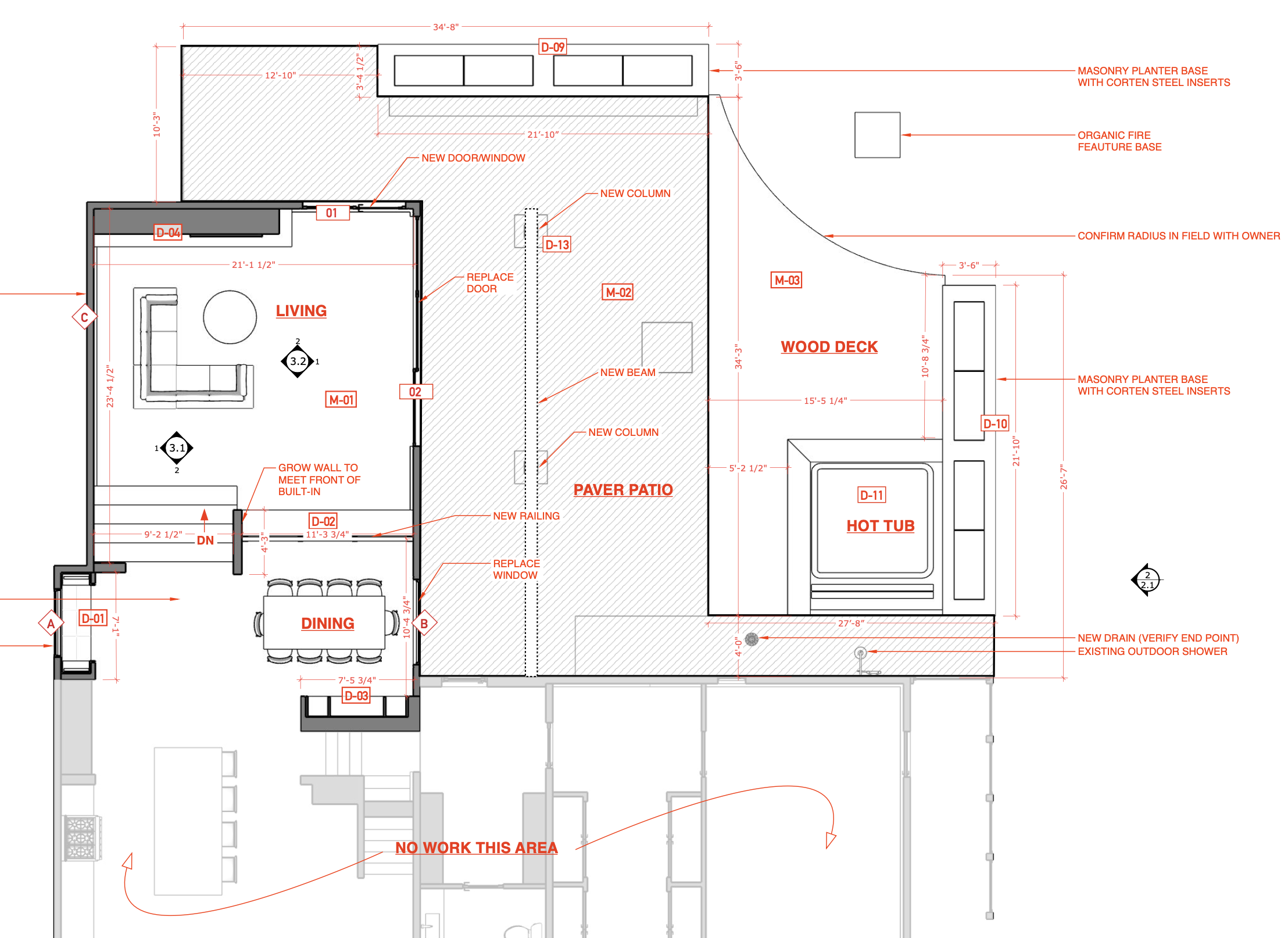
Today, SketchUp and Layout put professional-grade design tools on any laptop. Enscape transforms your models into photorealistic visualizations instantly. These aren't simplified versions of "real" tools - they're what professionals use, now accessible to anyone willing to learn.
The knowledge barriers have fallen too. Building codes are searchable online. Energy modeling tools are free. AI can help you understand complex provisions and review your work.
You don't need to go back to school or invest in expensive infrastructure. The tools that were once locked behind institutional walls are ready to be learned and used.
What separates successful building designers from everyone else isn't privileged access or exceptional talent—it's the willingness to acquire a systematic process and apply it with integrity.
From Hammer-Swinging
to Problem Solver
If you're an experienced builder, you've spent decades accumulating knowledge that goes far beyond swinging a hammer. You can look at a space and instantly see what's possible. You understand how light flows, how people move through rooms, how small decisions cascade into big impacts. You've been solving design problems your entire career—you just haven't been calling it design.
But you've also felt your body keeping score. You've wondered how long you can keep doing this, and what comes next.
Design work lets you take everything you've learned and apply it from a different position. Instead of installing the solution, you're creating it. The problems you solve are the same, but the tools shift from physical to digital, from job site to desk.
For younger builders entering a crowded field, design capability changes the equation entirely. It's about moving from "I can build your project" to "I can help you imagine your project, then bring it to life."
Adding design services isn't about chasing a trend. It's about recognizing that the knowledge you already have has applications you haven't fully explored yet..
A Movement:
You’re Not Starting Alone
The biggest obstacle to starting something new isn't the skills you need to learn—it's the feeling of stepping into unknown territory alone. "What if I'm not qualified? What if I make a mistake? What if I'm the only person trying to do this?"
You're not.
Across the country, thousands of builders have made the same decision you're considering. They've learned to navigate codes, master design software, and deliver professional design work—all without traditional architectural credentials. And they're eager to share what they've learned.
This is a real community. There are forums where building designers troubleshoot code questions together. There are groups sharing SketchUp techniques. There are practitioners helping newcomers avoid the mistakes they made early on.
You're joining a movement that's redefining what builders can be. The old boundaries are dissolving. Building designers are proving every day that professional-quality work doesn't require a professional license—it requires commitment, process, and integrity.
The path has been walked. The community exists. You're not pioneering into the wilderness—you're joining a well-traveled trail with experienced guides and fellow travelers.
This is your moment. The need is urgent. The tools are ready. The community is waiting.
Why Design Build? (Page)
Why Become a Building Designer - and why it’s possible? (page)
How DBA Works. (page, framework)
Community - parts are greater than the whole.
Easy to understand courses (sample overview course on Squarespace)
The Frame Work:
Org, Nav, Comm. Digital tools. How to leverage existing knowledge. How to fill in the gaps of missing skills.
One-On-One Support
Contact Us
Interested in working together? Fill out some info and we will be in touch shortly. We can’t wait to hear from you!